
Is Mental Health Medication Addictive? What People Never Tell You…
When people whisper about mental health medication, the conversation is almost always wrapped in fear. Some think medication is addictive. Some believe it changes your personality. Others think taking it means you’re weak, unstable, or “can’t manage life on your own.” And then there’s the other group, the ones who expect a pill to fix their entire world in a week.
Before we go any further, let’s get one thing straight: not all mental health medications are addictive. In fact, most AREN’T. The problem isn’t usually the medication. The confusion comes from lumping every pill into the same category and spreading fear without understanding.
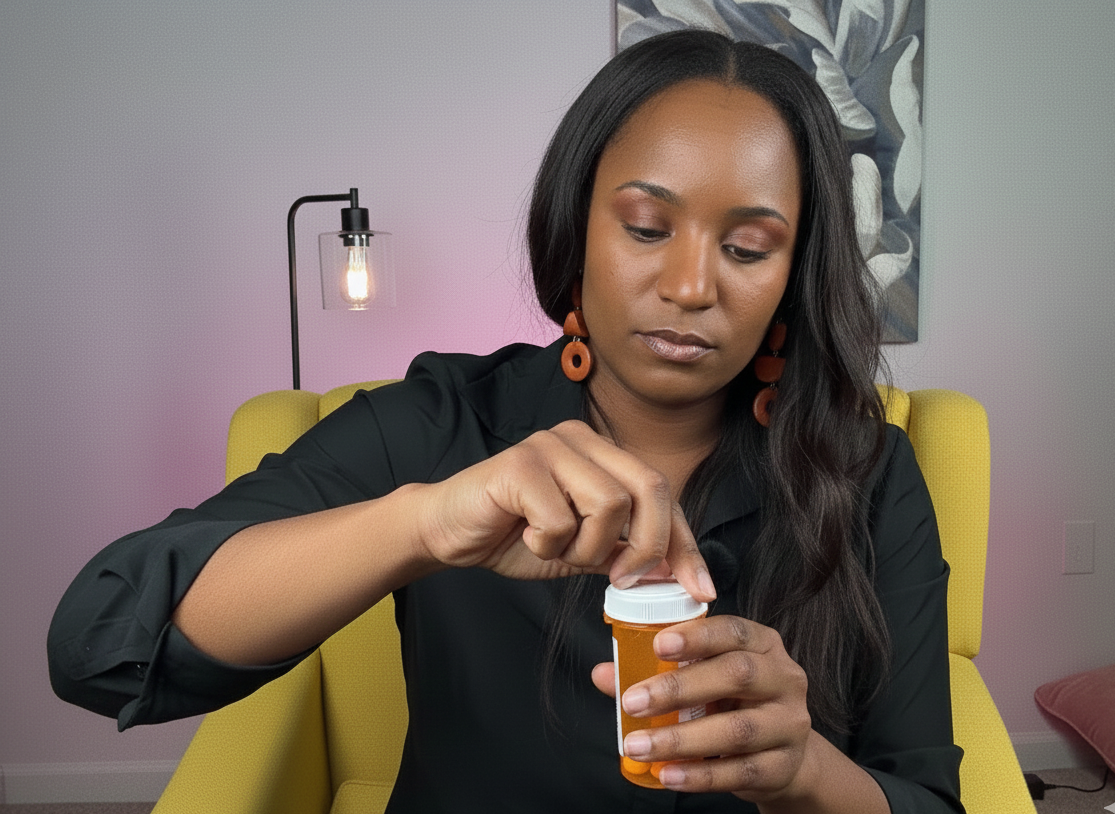
Antidepressants, mood stabilizers, antipsychotics: these are not substances that create a high or force your brain into dependency. They don’t hijack your reward system or create cravings. They can cause withdrawal symptoms if stopped suddenly, but withdrawal is not addiction. Withdrawal simply means your brain needs time to adjust. Addiction is something entirely different, and it’s not how those medications work.
The medications with real addiction potential are usually fast-acting anti-anxiety drugs known as benzodiazepines. These can create dependence if misused or taken too long. But even then, supervised and used correctly, they can be safe and helpful. The danger happens when medication becomes your only coping strategy instead of one piece of a larger healing plan.
And that brings us to the part people rarely talk about: medication, by itself, is never the full solution. Medication can stabilize you, calm your nervous system, lift the fog, and quiet the overwhelming parts of your mind. But medication cannot untangle trauma. It cannot replace emotional processing. It cannot teach you boundaries, rebuild your identity, or heal the beliefs you’ve carried since childhood. Medication gives you enough mental clarity to actually start the work, but the work still has to be done.
This is why medication and psychotherapy go together. They are not competitors. They are a team. Medication quiets the chaos. Therapy helps you understand the chaos and teaches you how to live beyond it. One gives you breathing room. The other shows you what to do with that breath.
People fear medication not because of the medicine, but because of the stigma. There’s a belief that taking medication means something is wrong with you. But if someone has high blood pressure, nobody tells them to “pray harder” or “breathe through it.” If someone has a broken leg, nobody tells them to “walk it off.” The brain is an organ just like any other. When it needs support, there is no shame in giving it support.
Medication becomes dangerous only when it replaces responsibility, when it becomes the thing someone leans on instead of stepping into healing. If someone takes medication but refuses therapy… if someone avoids their emotions… if someone never learns coping skills… that’s when problems show up. Not because of the medication, but because medication was used as avoidance instead of support.
Healing isn’t just taking a pill. Healing is looking at your patterns, understanding your story, learning emotional regulation, building identity, and gaining tools that help you navigate life with clarity. Medication can help you get to the starting line, but it doesn’t run the race for you.
The reason people assume medication is addictive is because they’ve seen others depend on it emotionally. Not chemically—emotionally. When life feels unbearable, and a pill gives temporary relief, it’s easy to cling to that relief without doing the deeper work. But that’s not addiction. That’s someone trying to survive without the full toolkit they need.
The most important thing to understand is this: medication is not meant to make you someone else. It’s meant to help you feel more like yourself again. If you ever take a medication and feel muted, numb, or unlike who you truly are, that’s not a sign to fear medication; it’s a sign to adjust the plan with your provider.
The power of medication is not in the pill. The power is in the partnership—medication paired with therapy, therapy paired with lifestyle changes, lifestyle paired with support and inner work. Together, those pieces create breakthroughs. Together, they help people go from surviving each day to actually living again.
Some people need medication long-term. Some people use it short-term. Some don’t need it at all. There is no “one story fits all.” Each brain, each body, each trauma, each healing journey is different.
So is mental health medication addictive? Most of the time, no. Are there a few medications that require caution? Yes. But the bigger truth is this: medication is a tool. Not the enemy, not the fix, not the identity, and not the problem.
Medication can steady your mind. Therapy can rebuild it. And your choices, clarity, and willingness to heal can transform it. Bang!